 Torch-down
Home / Torch-down roofing
Torch-down roofing in Philadelphia
Torch-applied modified bitumen is the roof we install every week. It is our specialty, and it is the reason most of our customers call us.
A torch-down roof is built in layers that are heated and fused together on your roof, so the finished surface has no glued seams and no loose edges for wind or water to work at. Done carefully, it is one of the most durable roofs you can put on a Philadelphia rowhome or commercial building.
- Registered & insuredPA HIC #PA189779
- 25+ yearsexperience
- 12-year guaranteeon new roofs
- Google Guaranteedverified provider
- BBB Accreditedbusiness
What "torch-down" actually means
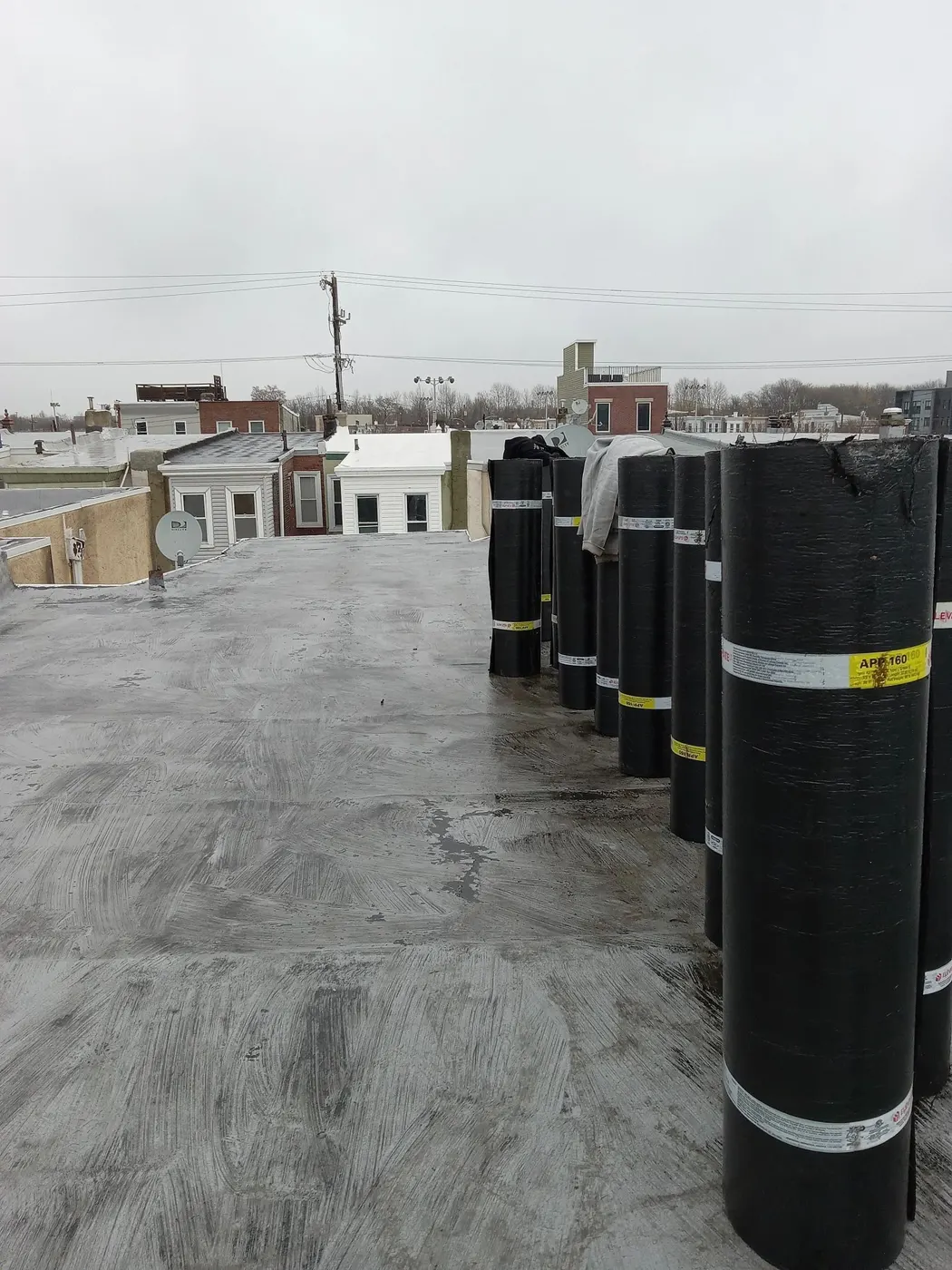
Modified bitumen is asphalt that has been blended with polymers so it stays flexible in cold weather and does not soften too much in summer heat. It comes in rolls, reinforced inside with a polyester or fiberglass mat.
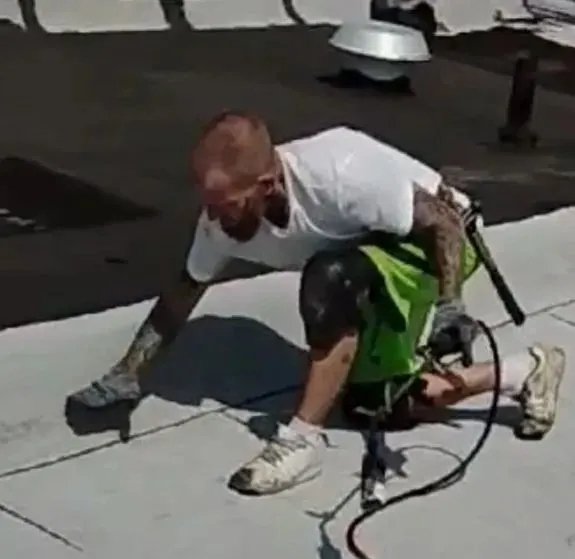
On a torch-down roof, the roofer heats the underside of the cap sheet with a propane torch as it is unrolled. The bitumen melts, bonds to the base sheet beneath, and flows into the overlap with the neighboring sheet. When it cools, the two sheets are one. That is the big difference from glued or taped systems: every seam is welded rather than stuck.
Homeowners often call it "rubber roofing." It is not the same material as EPDM rubber, but it does the same job on a flat roof, and in our experience it holds up better to foot traffic, ponding at drains and the patchwork of parapets and party walls you find on Philadelphia rows.
How we build a torch-down roof
The membrane is only as good as the surface under it and the details around it. This is the order we work in.
Strip to a sound surface
On a replacement we tear off the old roofing so we can see and walk the deck. Rotted boards or delaminated plywood are cut out and replaced before anything new goes down. Torching over a wet or soft deck traps the problem under a brand-new roof.
High-density fiberboard
High-density fiberboard is mechanically fastened to the deck. It gives the new roof a firm, even surface to bond to and a solid layer between the deck and the membrane.
SBS self-adhered base sheet
The base sheet is the first waterproof layer. It is self-adhered: the backing peels away and the SBS membrane bonds straight to the fiberboard, with no flame needed at this stage. Its seams are offset from the cap sheet seams above, so no joint ever sits directly over another.
White granulated cap sheet
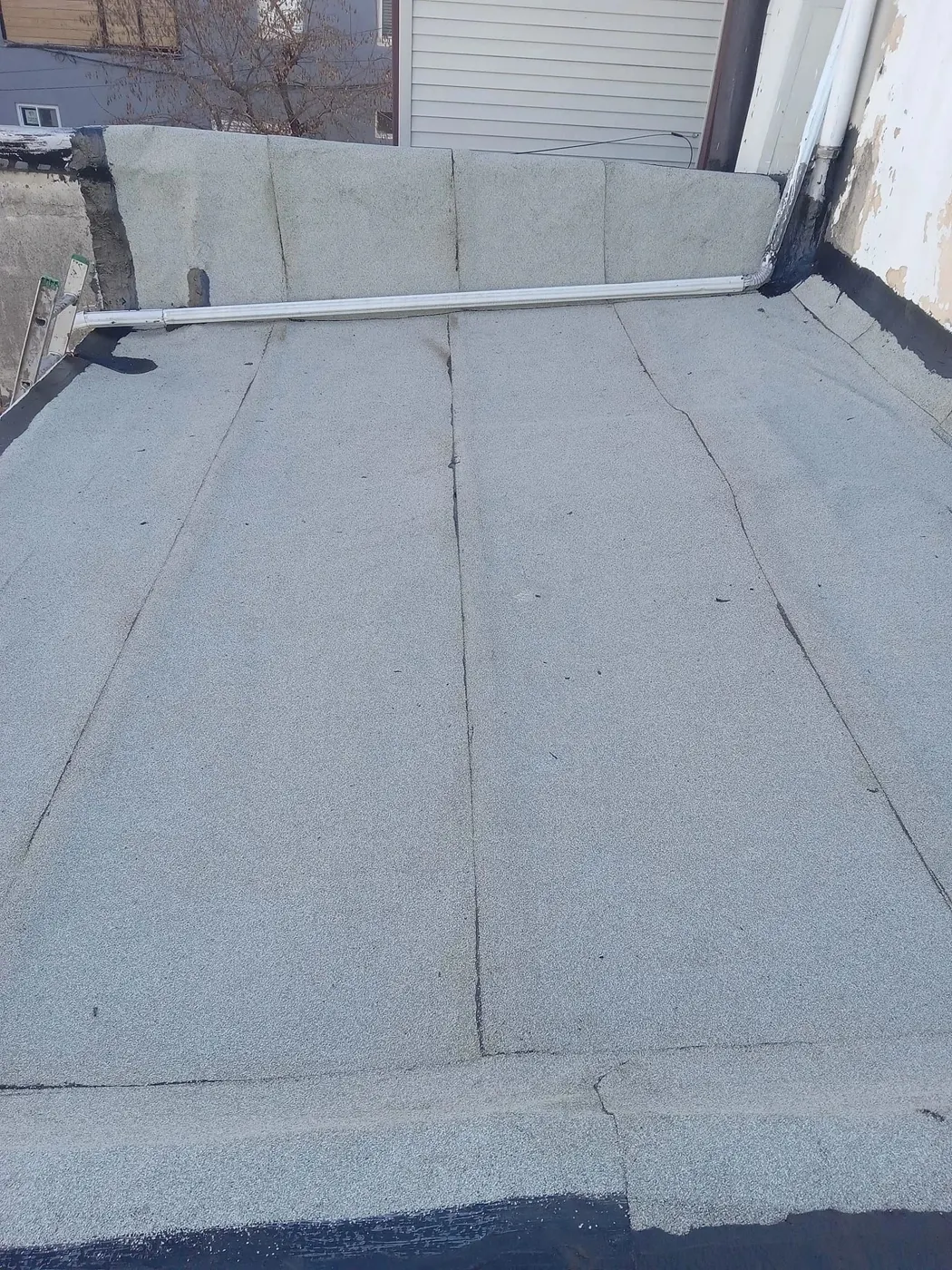
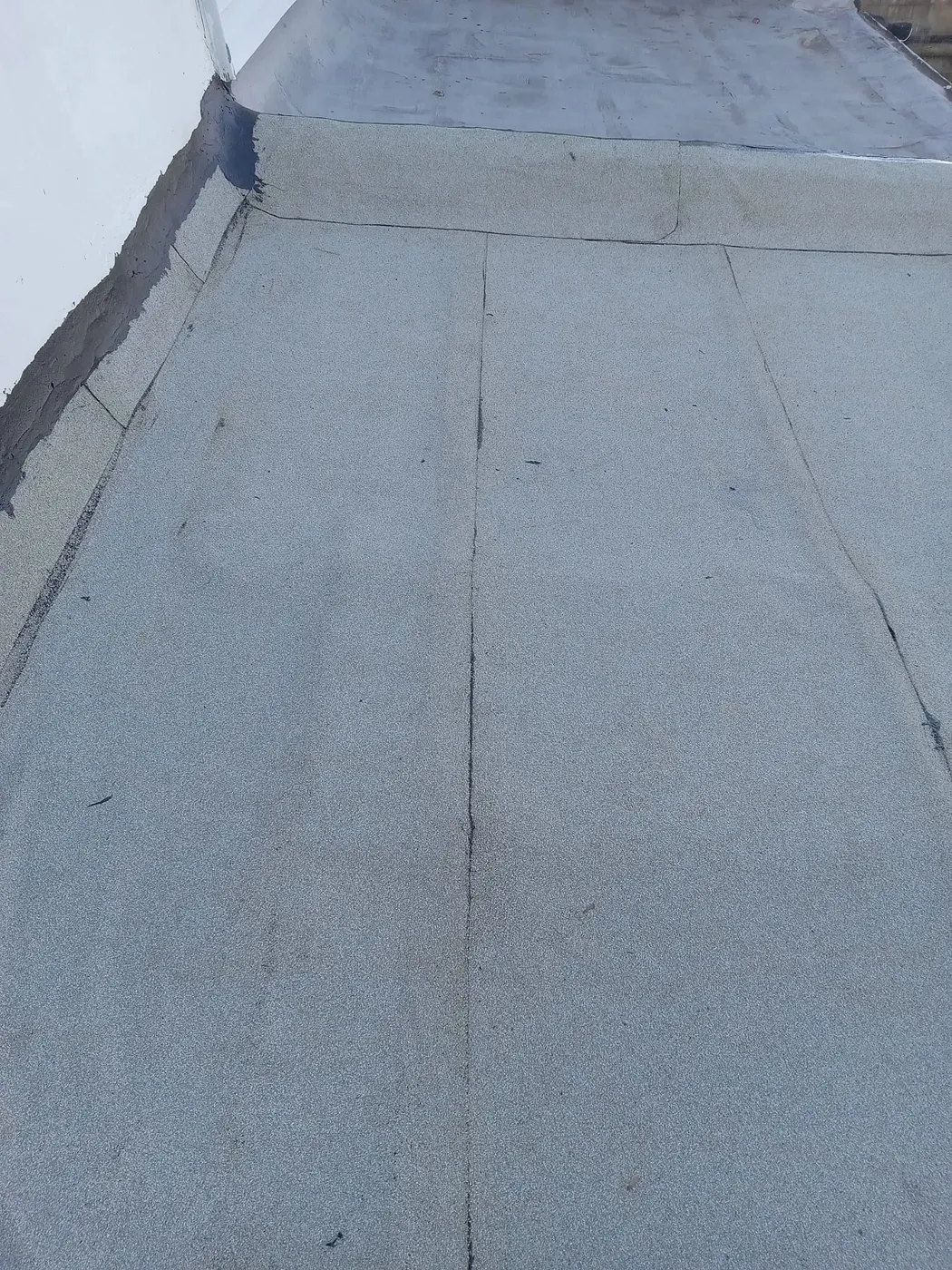
The finish layer is fully torched to the base sheet. The mineral granules protect the asphalt from sunlight and the white surface reflects much more heat than a black roof, which makes a real difference on a top-floor bedroom in July.
Seams, checked by hand
Each lap is heated until bitumen bleeds out along the edge, then pressed and checked along its whole length. A dry seam looks fine on day one and opens up a winter later, so this step is not rushed.
Flashing and details
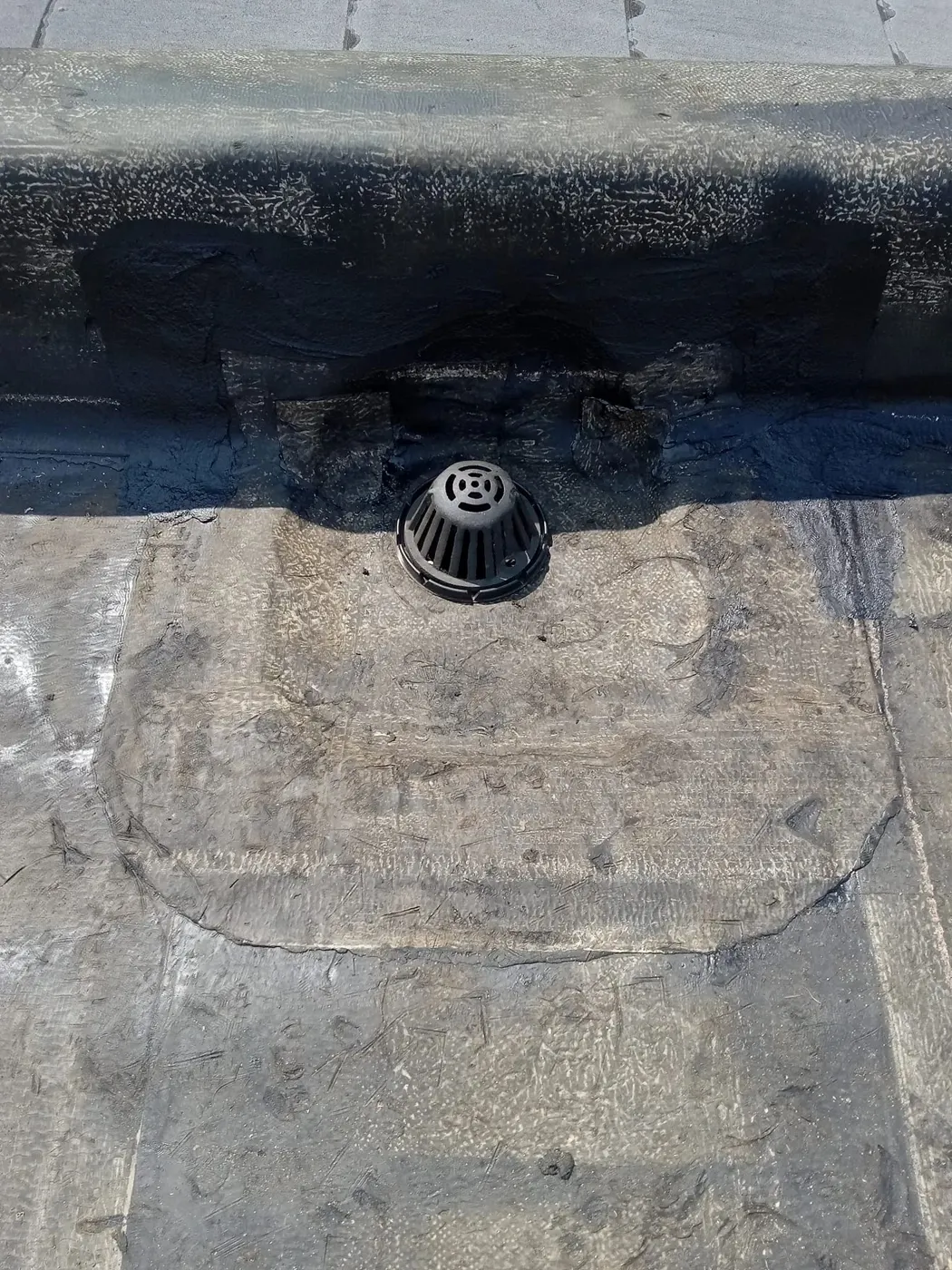
Membrane is carried up parapet and party walls, into drain boxes and scuppers, and around every pipe, flue, hatch and skylight curb. These details take longer than the open field of the roof, and they are where a roof succeeds or fails.
Why torch-down suits Philadelphia roofs
Rowhome geometry
Narrow roofs, shared parapets, back additions at a different height and a neighbor's roof meeting yours. Torched membrane can be shaped and fused into all of those transitions.
Freeze and thaw
Philadelphia winters swing above and below freezing again and again. Polymer-modified bitumen stays flexible through those cycles instead of cracking.
Water at the low point
Old flat roofs rarely drain perfectly. A fully fused membrane tolerates the water that sits near a drain or scupper better than glued seams do.
Foot traffic
Roofs here get walked on: HVAC service, chimney work, satellite installers. A granulated cap sheet takes that traffic without tearing.
Repairable
Years from now, a damaged section can be cut out and a new piece of cap sheet torched in, matching the system already there.
Summer heat
A white granulated surface reflects sunlight that a black tar or rolled roof would soak up, so the roof and the rooms under it stay cooler.
The details we spend the most time on
Anyone can roll out cap sheet across an open roof. The difference between a roof that lasts and one that leaks in its second winter is almost always at the edges.
- Parapet and party walls. Membrane runs up the wall and is terminated and sealed under the cap or coping, not stopped at the corner.
- Drain boxes. Old, rusted or undersized drain boxes are replaced and the new membrane is torched down into them.
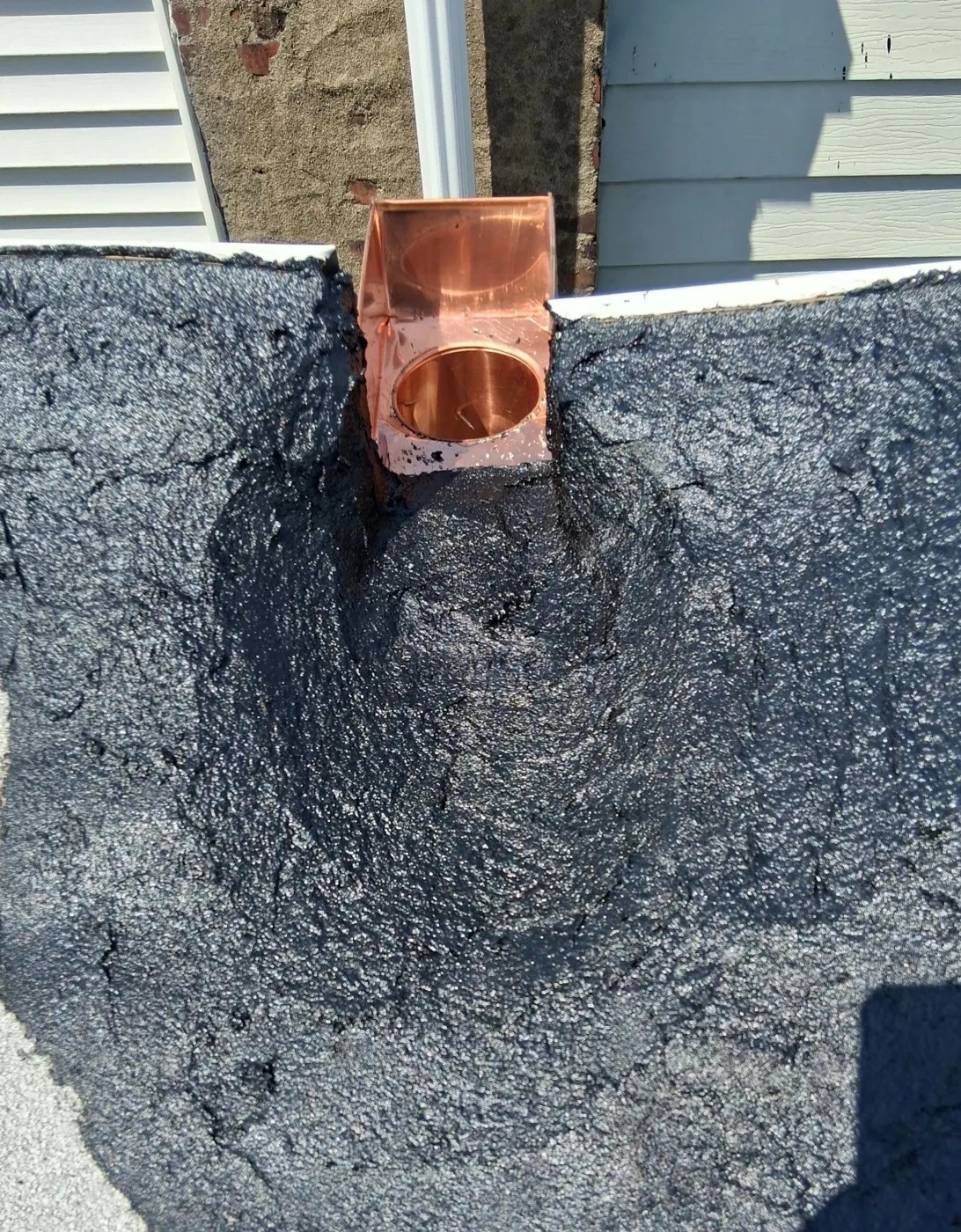
- Scuppers. Through-wall scuppers are rebuilt, often with new copper boxes, and flashed so water leaves the roof instead of running behind the wall.
- Penetrations. Vent stacks, flues, skylight curbs, roof hatches and equipment stands each get a proper flashing detail.
- Tie-ins. Where your roof meets a neighbor's, we make a clean, sealed transition so their roof's problems do not become yours.
Torch-down services
New roof or replacement
Full tear-off and a new base sheet and cap sheet system with new flashing.
Flat roof replacementRepairs to torch-down roofs
Seams, blisters, flashing failures and leaks at drains and scuppers.
Flat roof repairLooking after it
Inspections and upkeep that keep a torch-down roof doing its job for longer.
Flat roof maintenanceTorch-down roofing questions
How long does a torch-down roof last?
A well-installed modified bitumen roof commonly lasts 15 to 20 years or more. How long yours lasts depends mostly on the quality of the seams and flashing, how well the roof drains, and whether it is inspected and maintained. New roofing work from Forline Roofing carries a 12-year guarantee.
Is torching on my roof a fire risk?
Open-flame work needs care, which is why it should only be done by a crew that torches roofs every day. We protect wood edges and openings, keep the flame away from combustible materials, and check the roof before we leave it.
Why a white granulated cap sheet instead of black?
The granules shield the asphalt from UV, which is what breaks a roof down over time. White granules also reflect much more of the sun's heat than a black surface, which keeps the roof cooler and the space beneath it more comfortable.
Can you torch a new roof over my old one?
We prefer to tear off to the deck. It is the only way to find wet or rotted decking and to rebuild the drains, scuppers and wall flashing properly. If a roof is a good candidate for an overlay we will explain why, but we will not cover up a problem to save a day.
Do you work on torch-down roofs other companies installed?
Yes. We repair and maintain existing modified bitumen roofs regardless of who put them on, and we will tell you honestly whether a roof is worth repairing.
Get a straight answer about your flat roof
Tell us what is going on and where the property is. We will come out, get on the roof, document what we find, and tell you plainly whether it needs a repair, maintenance, a coating or a new roof.
- 267-595-1098
Open 24 hours, 7 days a week. Call or text any time - info@forlineroofing.com
- Based in South Philadelphia (19147), working across Philadelphia and nearby towns