 Torch-down
Home / Flat roof repair
Flat roof repair in South Philadelphia
A leak on a flat roof is a symptom. We find where the water is actually getting in, fix that spot with the right materials, and tell you honestly if the roof has bigger problems.
We repair torch-down, modified bitumen and older rolled flat roofs for homes and businesses across South Philly and the rest of Philadelphia.
- Registered & insuredPA HIC #PA189779
- 25+ yearsexperience
- 12-year guaranteeon new roofs
- Google Guaranteedverified provider
- BBB Accreditedbusiness
Common flat roof problems we fix
Most leaks we are called out for come from a short list of causes. Here is what we see most on Philadelphia flat roofs.
Failed parapet flashing
The membrane at the base of a parapet or party wall cracks, pulls away or was never run high enough. Water gets behind it and shows up on the top-floor wall or ceiling.
Drain boxes and scuppers
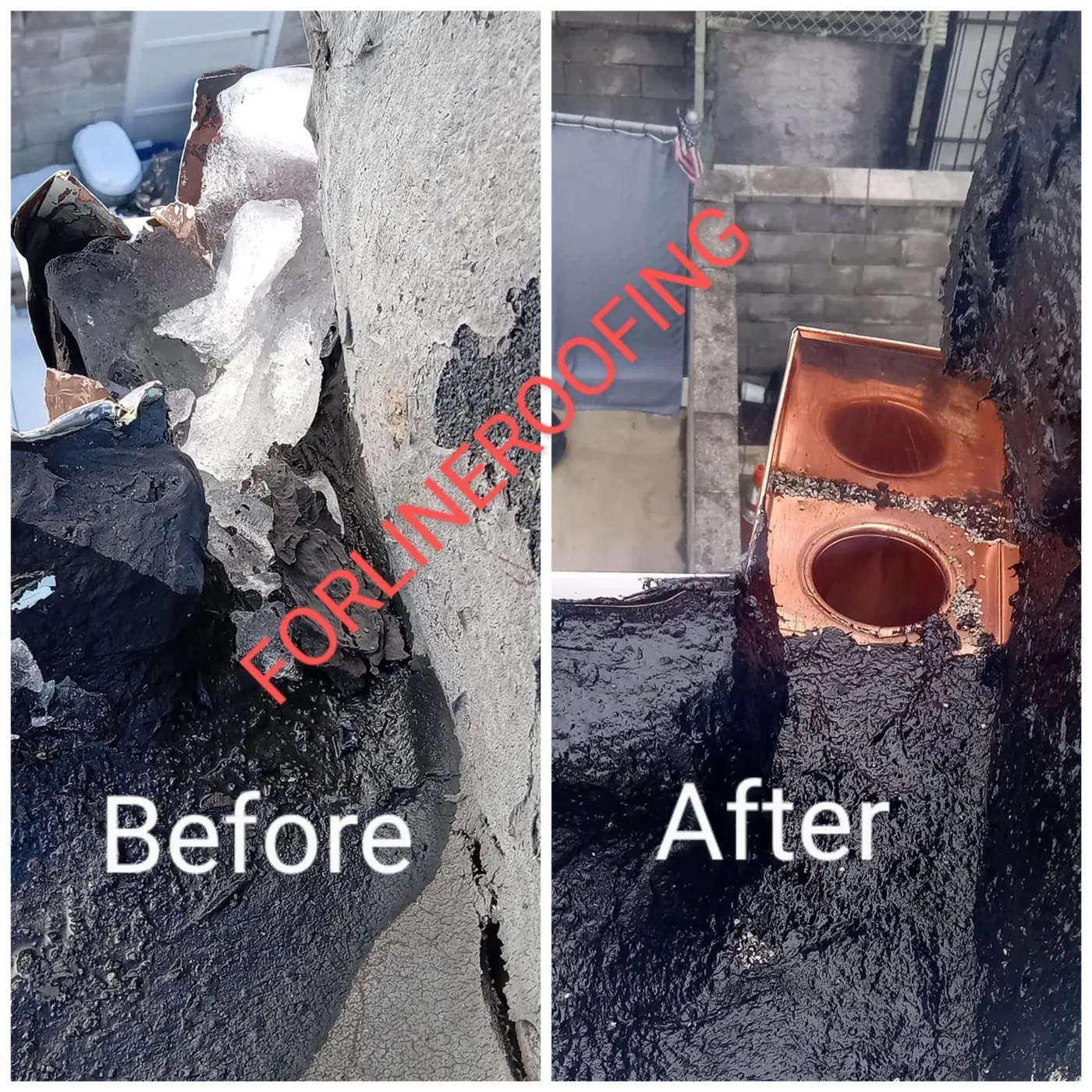
Rusted drain boxes, scuppers that have separated from the roof, and old metal smeared with roof cement are some of the most common leak sources we find.
Open seams
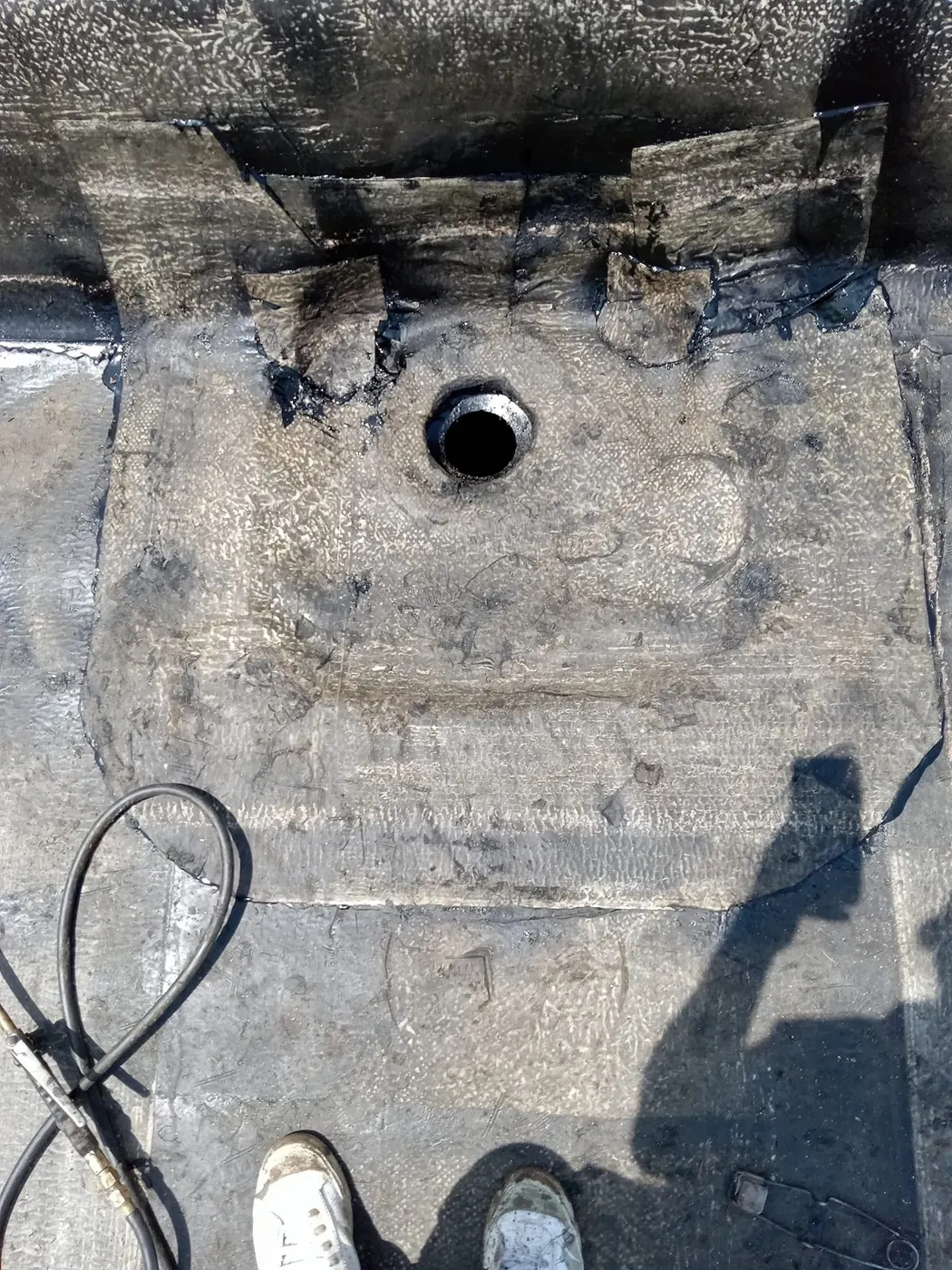
Laps that were never fully fused, or have aged and lifted, let water run sideways under the membrane.
Blisters and splits
Trapped moisture or air lifts the membrane into blisters that eventually crack. Splits often follow movement in the deck below.
Pipes, flues and curbs
Vent stacks, chimney flues, skylight curbs, hatches and HVAC stands are all holes in the roof. Their flashing dries out and fails long before the rest of the roof does.
Ponding and worn coatings
Water that sits for days breaks down the surface faster, and an aluminum coating that has worn through leaves the asphalt exposed to sun.
How we diagnose a leak
Water travels. On a flat roof it can run along the deck or behind a wall for several feet before it drips, so the stain on your ceiling is rarely directly under the hole.
Start inside
We look at where the water shows up, how it behaves in different kinds of rain, and what is above that spot.
Work the roof from the details in
Walls, drains, scuppers, seams and penetrations around the leak area are checked first, because that is where most leaks start. We probe for soft or wet spots in the deck.
Document it
We take photos of what we find so you can see the cause for yourself, not just take our word for it.
Recommend the right fix
You get a clear recommendation: a targeted repair, reflashing, maintenance, a coating, or in some cases replacement, with the reasons for each.
Repair options
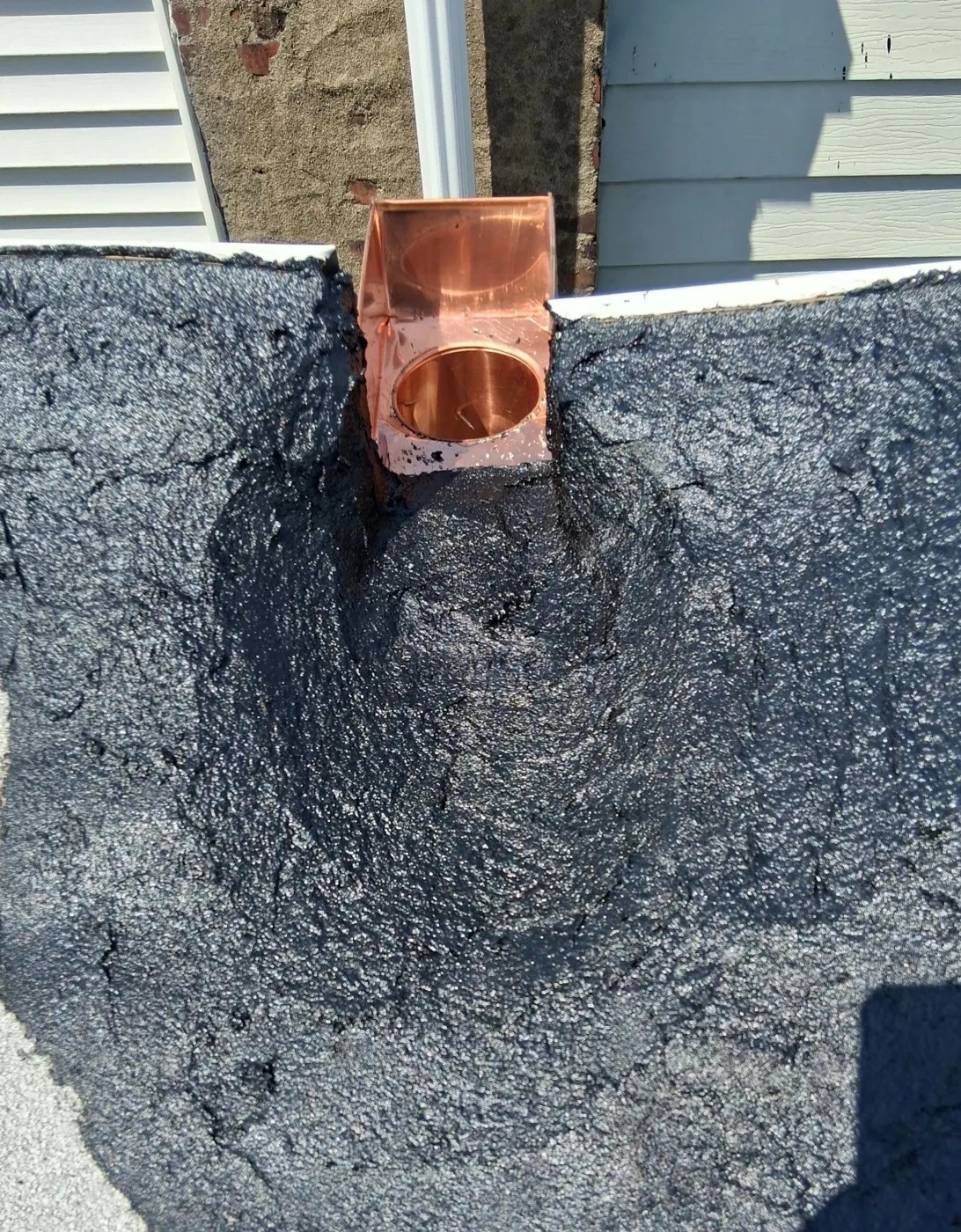
We repair with the same torch-down materials we install, so a repair becomes part of the roof rather than a patch sitting on top of it.
Seam and blister repairs
Loose laps are reheated and sealed. Blisters and splits are cut out and a new piece of modified bitumen is torched in over the area, extending well past the damage.
Reflashing walls
Failed flashing at parapets and party walls is removed and new membrane is run up the wall and terminated properly.
Drain box and scupper replacement
Rather than sealing around old, corroded metal, we replace the drain box or scupper and torch the membrane into the new one.
Penetration repairs
Vent pipes, flues, skylight curbs and hatches are reflashed with new membrane and sealed.
Coating touch-up and restoration
Where an aluminum-coated roof has worn through, we repair the surface and recoat. See roof coating and restoration.
When repair is not enough
If the roof is wet underneath or failing everywhere, another repair is money spent on delay. We will say so, and explain what replacement involves.
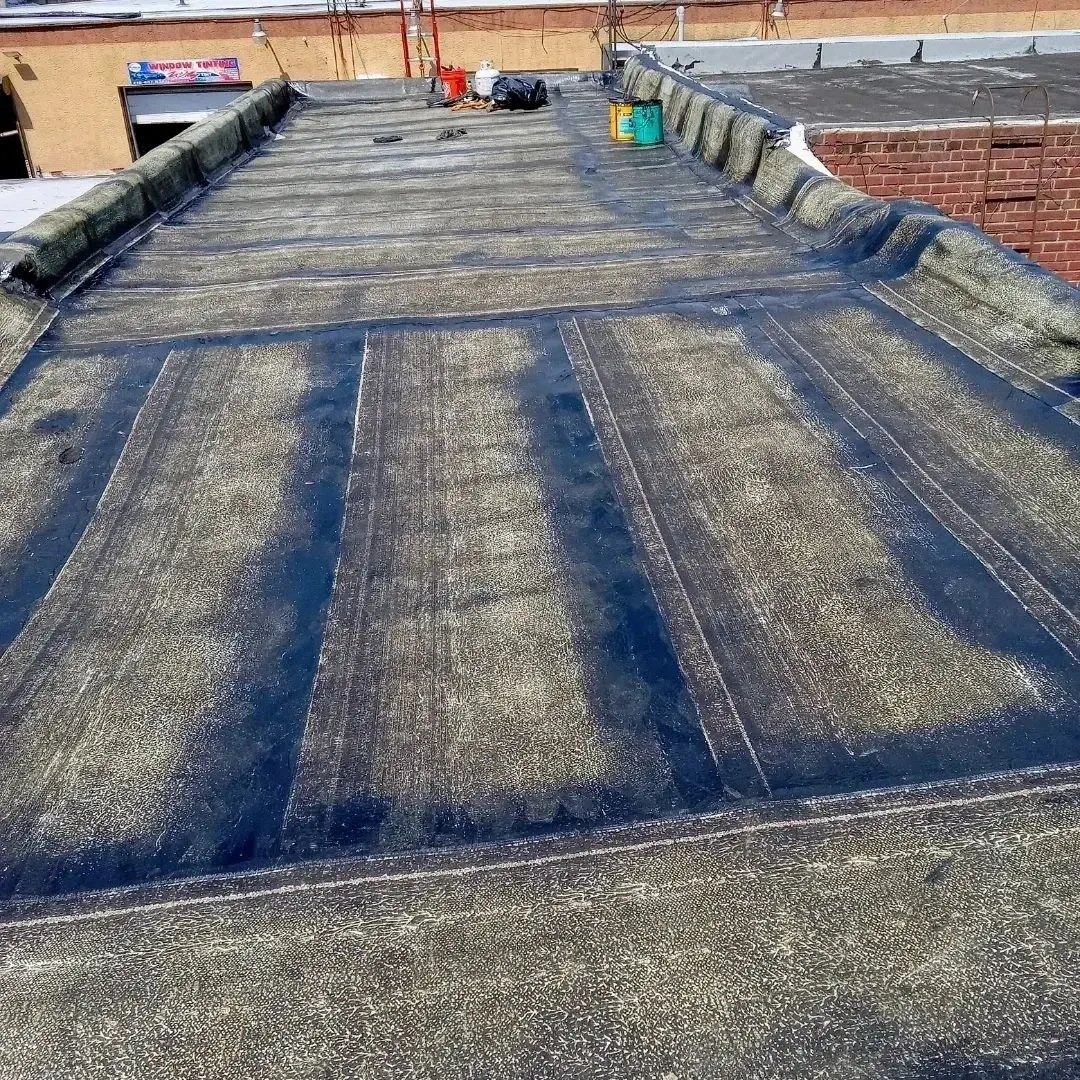
Why we avoid "just tar it" repairs
Roof cement smeared over a leak can stop a drip for a season. It also hides the cause, dries out and cracks, and makes the next repair harder because the real damage is now buried under it.
A roof covered in years of cement patches is one of the most common things we see on Philadelphia flat roofs. When we repair, we cut back to sound material and torch in new membrane, so the repair lasts and the next roofer can see what was done.
Repairs and maintenance work from Forline Roofing carry a 1-year guarantee.
Flat roof repair questions
My roof is leaking right now. What should I do?
Move belongings away from the drip, catch the water, and call or text us at 267-595-1098. Texting works any time. Do not go up on a wet roof, and do not pour roof cement into the drain or scupper, which can make a blockage worse.
Can you repair a roof another company installed?
Yes. We repair existing modified bitumen and rolled flat roofs regardless of who installed them.
How do I know whether to repair or replace?
If the problem is one detail on an otherwise sound roof, repair. If the deck is wet, the membrane is failing in many places, or the roof has been patched again and again, replacement usually costs less over time. We show you photos and explain our reasoning.
Do you repair leaks where my roof meets my neighbor's?
Yes. Tie-ins between adjoining rowhome roofs are a common leak source, and we seal them as part of the repair.
Get a straight answer about your flat roof
Tell us what is going on and where the property is. We will come out, get on the roof, document what we find, and tell you plainly whether it needs a repair, maintenance, a coating or a new roof.
- 267-595-1098
Open 24 hours, 7 days a week. Call or text any time - info@forlineroofing.com
- Based in South Philadelphia (19147), working across Philadelphia and nearby towns